
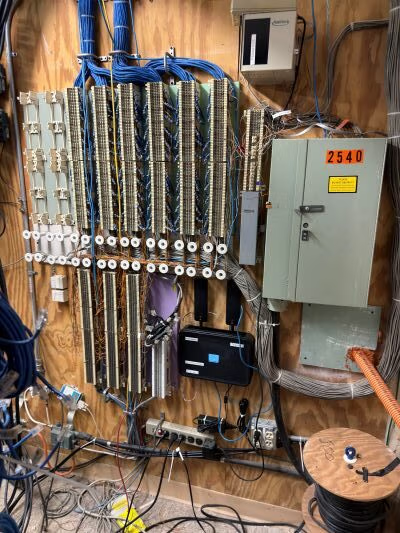
When planning or upgrading a business network, one of the first decisions is choosing the right type of cabling. Two of the most common options are fiber optic and copper cabling. Both have their place in modern business networks in Chicago, but the right choice depends on your building, network requirements, budget, and plans for the future.
What Is Fiber Optic Cabling?
Fiber optic cabling uses light to transmit data through extremely thin strands of glass or plastic – often looking like cotton candy. However, this is a treat you do not want to eat! Fiber optic cabling is extremely effective because, light can transmit data over much longer distances than traditional copper cabling while maintaining high performance.
Commonly fiber is used for:
- Building-to-building connections
- Data centers
- Network backbones
- High-bandwidth applications
- Long-distance network connections
- Environments with significant electrical interference
Fiber is also available in different types, including single-mode and multimode fiber, each designed for different network requirements. Infinity Technologies can install every type of structured cabling and offer professional insight on which format would be the best for your organization.
What Is Copper Cabling?
Copper Ethernet cabling transmits data using electrical signals. It has been a standard choice for business networks for decades and remains extremely common. For many Chicago and Northwest Indiana businesses, copper remains a practical option for connecting devices within an office or building.
Common categories include Cat5e, Cat6, and Cat6A. Copper is often used for connecting:
- Computers
- Printers
- Wireless access points
- VoIP phones
- Security cameras
- Network switches
- Other network-connected devices
Fiber vs. Copper: What’s the Difference?
Okay, now let’s compare the two. The biggest differences come down to distance, bandwidth, installation, and cost.
- Distance
- Fiber can support much longer cable runs than copper without the same signal limitations.
- Speed
- Both fiber and modern copper can support high-speed networking. The appropriate cable category and network equipment determine the actual performance.
- Interference:
- Fiber is resistant to electromagnetic interference because it does not transmit data using electrical signals.
- Power:
- Copper can support Power over Ethernet (PoE), allowing certain devices such as wireless access points, phones, and security cameras to receive power and data through the same cable. Fiber does not provide PoE by itself.
- Cost:
- Copper is often less expensive and easier to deploy for standard workstation connections, while fiber can make more sense for backbone connections and longer distances.
Which Should Your Business Use?
It doesn’t always have to be one or the other. Many of our partner organizations use both fiber and copper depending on the actual technology infrastructure the cabling will support. For example, fiber may connect different buildings or network closets, while copper Cat6 or Cat6A cabling connects individual workstations, phones, cameras, and wireless access points.
Dual deployment allows a business to use each type of cabling where it makes the most sense. That is why Infinity Technologies takes a consultative approach to designing organization networks in order to consider their unique characteristics that often subtlety make a difference on the efficacy of their technology ecosystem. Our expert technicians will advise you on the best places to install fiber optic or copper cabling that reflects industry and security standards.
Think About the Future
Network infrastructure can remain in place for many years, so cabling decisions shouldn’t only be based on what your business needs today but include the needs of tomorrow.
Before installing new cabling, consider:
- Expected network growth
- Internet and network speeds
- Building size and layout
- Distance between network locations
- Number of connected devices
- Wireless access point requirements
- Security camera deployments
- Future technology upgrades
Installing the right infrastructure from the beginning can help reduce the need for expensive rework later.
Need Help Planning Your Business Network?
Choosing between fiber and copper is only one part of designing a reliable network. Proper cable selection, pathway planning, termination, testing, labeling, and network design all contribute to long-term performance. Infinity Technologies provides structured cabling, fiber optic, network infrastructure, wireless networking, and technology solutions for businesses and organizations. We are local to Chicagoland with our headquarters in Mokena, Illinois. Our technicians are readily available for consultations, troubleshooting, and installation onsite at your facilities.
Whether you’re building a new space, expanding an existing network, or replacing outdated infrastructure, the right cabling strategy can give your business a stronger foundation for the future. Contact us today for a FREE consultation and see where we can upgrade your business’ cabling.